True Lies

ACTRA performers know a good story when we hear one. It’s our bread and butter after all. But what happens when storytelling is weaponized to distort reality?

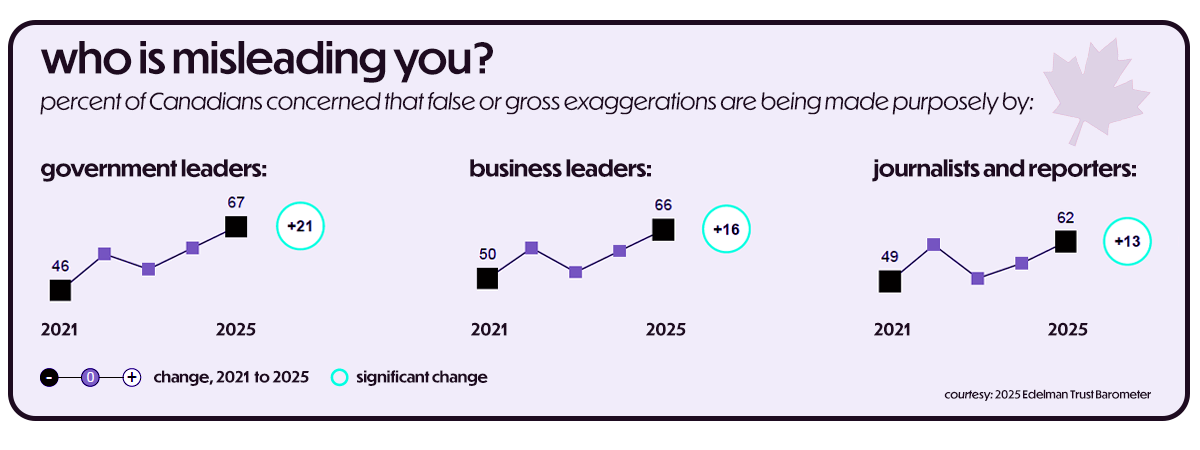
This is not hypothetical; it’s happening every day. Disingenuous, or outright malicious, manipulation of facts pollutes social media, news outlets, and public discourse, eroding trust in institutions that rely on truth – including unions.

Misinformation (falsehoods spread unintentionally) and disinformation (deliberate lies designed to mislead) are injected into the media ecosystem, often by those chasing political or financial gain. These narratives are engineered to provoke, manipulate, and go viral.

“… this is a direct and urgent threat.”

This manufactured chaos is moving beyond just politics and is aiming for organized labour and human rights institutions. When truth loses footing, the foundations of collective bargaining, artistic freedoms, and civil discourse start falling, threatening our industry… and society. For unions like ours – this is a direct and urgent threat.

Disinformation has already delegitimized political and social norms, and labour is in its crosshairs. Eroding public trust paves the way for anti-union forces to spread lies about collective agreements, workers’ rights, and the right to labour action. ACTRA performers have experienced firsthand how corporate interests benefit by disrupting union protections.

Make no mistake, big business wants an end to the labour movement. Unions fight for workers which gets in the way of corporations who care more about the bottom line than the well-being of the working class. Anti-union training and union-busting is a multi-million-dollar industry in North America; with firms dedicated to initiatives that destroy organized labour. For them, harnessing disinformation in the workplace and online is a critical tool in their kit. And it’s working. Look no further than the many netizens online who parrot narratives such as “union workers are lazy” and “unions are corrupt and take money from your paycheque.” These are words crafted by social media provocateurs aiming to diminish labour rights, and then sadly repeated by those who buy into their lies.

Disinformation does not need a big budget to succeed. Once planted – especially during times of hardship – a misled public quickly becomes the viral messengers.

But what happens when words are not enough to spread falsehoods? Enter misinformation’s viciously nefarious weapon – deepfakes; a nasty tool used especially against performers due to the nature of our work.

If disinformation is the script, deepfakes are the special effects. Artificial Intelligence can now fabricate media so convincingly that anyone can appear on video “saying” or “doing” things they never contemplated. Imagine a clip of an ACTRA union leader “endorsing” anti-labour legislation. Entirely fake, yet believable enough to go viral in seconds, with long-term damaging effects.

“… it will become increasingly challenging to distinguish fact from fiction.”

Often dismissed as “harmless” humour, deepfakes are designed to soften public resistance to media manipulation. As these tools evolve, it will become increasingly challenging to distinguish fact from fiction.

Targeting organized labour and abusing our likeness is bad enough, but what about the effect on our daily lives? If you spend any time on social media, you have no doubt seen – and felt – a big shift in discourse, and deepened divisions sown online.

This change didn’t happen overnight. Years of widening income gaps, entrenched class systems and labour injustice, created fertile ground to exploit financial and political desperation. Social media is the fuel to its fire. Most of us carry a world of media in our pockets. Our ever-present smartphones alert us to “breaking news” at astonishing speeds. But whose truths are we reading? The lens of news is often focused by whose wealth owns the source. And it’s moving at lightning pace.
Our industry grapples with AI threats – from digital likeness rights to synthetic performances and deepfake-driven falsehoods threatening job security and creative integrity. If left unchecked, this technology and those behind it will undermine art, democracy, and truth itself.

This is why ACTRA is investing in advocacy, lobbying the Canadian government, and partnering with industry allies worldwide, to push for strong AI legislation. We are committed to protecting performers’ rights, defending our profession, and countering disinformation at every turn.

ACTRA members have a role to play too. Only individuals, committees or groups that are sanctioned by ACTRA are permitted to speak on behalf of ACTRA. As a member-led organization, ACTRA leaders are made up of elected working ACTRA members who bring experience to the table to make sure the union is operating well for all members, ensuring trusted communication – based on facts – reaches membership first.

Therefore:

Treat information like a script.
Ask: Who wrote it? Why? Who benefits? Always verify before sharing, especially if it seems provocative or causes a strong emotional reaction.

Know who is speaking.
Identify the source. Messages or “news” said to be from your union should always be verified through official union websites or social media channels. If you can’t find the same information there, treat it as suspect. When unsure, reach out to your union directly to get the facts.

Champion media literacy.
Advocate for it in schools, unions, and your circles. An informed public is the best defense against disinformation.

Support independent media.
A free press is democracy’s backbone. Know who owns the media you consume and how that shapes the narrative.

Hold tech companies accountable.
Their platforms profit from clicks, not truth. Push for algorithm transparency, stricter standards, and real consequences for harmful disinformation. If they don’t match your values, find an alternative platform.

Get involved.
Whether voting, organizing, or rallying, your participation matters. Disinformation feeds off silence and apathy. Unions are built on collective voices, and those voices shape outcomes.

Disinformation is a production, but the plot is very real. It thrives on confusion, mistrust, and disengagement. But truth and facts, like any powerful story, have staying power. They endure. As ACTRA members, we understand the power of storytelling. Let’s use that skill not just to entertain, but to defend the values that make our art, and our democracy, possible.


Eleanor Noble is the National President of ACTRA – the Alliance of Canadian Cinema, Television and Radio Artists.



Royalties without Borders

The digital landscape has seen many advancements over the past 25 years, bringing with it changes to the world of media like never before. For artists and the industry as a whole, collaborating across borders is crucial. ACTRA Recording Artists’ Collecting Society (RACS) takes advantage of this type of globalization, strengthening relationships and strategizing with similar organizations around the world.

Kortnee Borden

As part of ACTRA Performers’ Rights Society, ACTRA RACS, is dedicated to collecting and distributing equitable remuneration royalties to performers for their contribution to audio and audiovisual works. Its mission is to ensure performers receive fair compensation for their creative contributions, while advocating for their rights. These royalties are generated from the use of performers’ work, including broadcasts, public performances, and private copying. In 2024, ACTRA RACS distributed over $3 million in royalties collected from territories outside of Canada to the rightsholders it represents – ensuring that artists are compensated fairly.

Home or abroad, ACTRA RACS plays a crucial role in ensuring Canadian performers are paid for their work. Our international reach has expanded significantly over the past decade, empowering Canadian performers to further their reach and receive compensation from foreign markets. For many artists this can be significant for their livelihoods. Currently, the organization has agreements in over 40 territories (and counting) positioning itself as a leader in global royalty collections.

A key part of that leadership is learning from others. ACTRA RACS’ relationships with other Collective Management Organizations (CMOs) worldwide are crucial. These relationships offer valuable perspectives on copyright laws worldwide. For example, in working with AIE Spain, we have gained invaluable insights on their rights around streaming. This knowledge is helping us explore how to adopt a similar framework in Canada in the future.

However, working internationally also presents nuances which can bring challenges, especially when it comes to securing proper royalty payments. As mentioned, copyright laws and royalty collection systems vary from country to country. To navigate these complexities, ACTRA RACS has established formal partnerships with collecting societies across the globe. These collaborations ensure compliance with international copyright laws while maximizing royalty collection efforts. ACTRA RACS is also a member of the Societies’ Council for the Collective Management of Performers’ Rights (SCAPR), a global nonprofit dedicated to best practices in royalty collection. Alongside its international partners, ACTRA RACS works to establish consistent processes and equitable royalty distribution standards that are implemented worldwide.

“Home or abroad, ACTRA RACS plays a crucial role in ensuring Canadian performers are paid for their work.”

Step-by-Step International Royalty Collection Process

  1. Identifying the Works
    ACTRA RACS maintains a comprehensive database of its members’ repertoire. Using established procedures, we register each performance and link it to its recordings. This is the data that serves as the foundation for matching to royalty-generating uses abroad.
  1. Tracking Usage
    We then monitor the work’s usage based on reports from our worldwide CMO partners. This includes tracking broadcasts, public performances, and digital streams with the territory’s jurisdiction.
  1. Submitting Claims
    We send a claim to the relevant CMO to verify the reported usage and calculate the payment.
  1. Receiving Funds
    Once verified, the CMO transfers royalties to ACTRA RACS.
  1. Distribution
    Finally, we distribute these royalties to our members. In turn, we reciprocate this process for CMOs depending on our partnership type with them.

The shift to digital media has come with complexities in tracking usage and collecting royalties, particularly from global streaming platforms. In many territories, including Canada, copyright laws haven’t kept up with the rise of on-demand streaming as the preferred way of listening to music. This is a key reason why global awareness of performers’ rights remains a priority for ACTRA RACS. Both internationally and domestically, ACTRA RACS continues to advocate for improved royalty systems that benefit Canadian performers and the global creative community.

By leveraging digital platforms and expanding their international reach, Canadian artists can harness the growing demand they’ve cultivated, amplifying their presence and connecting with diverse communities. As demand for Canadian artists grows, so does on the world stage. This is as a reminder that art transcends borders and languages, taking a universal form that resonates with audiences worldwide.

ACTRA RACS simplifies this process for performers, easing the administrative burden of managing royalties across multiple jurisdictions. This allows performers to focus on what really matters – creating art.

Looking ahead, ACTRA RACS aims to continue expanding our global network and collecting royalties more effectively in emerging neighbouring rights markets, such as India, South Africa, and South Korea. By leveraging technologies and our worldwide community, we will improve data accuracy, further streamline our processes, and continue to communicate openly with our members. We’re already seeing this with the adoption of digital tracking technologies and our participation in the Virtual Recording Database (VRDB), which enhances transparency and efficiency in royalty management.

As entertainment continues to globalize, ACTRA RACS remains essential in protecting the rights and livelihoods of Canadian artists, helping them thrive in an interconnected world.


Kortnee Borden is the Director of ACTRA’s Performers’ Rights Society (ACTRA PRS) and Recording Artists’ Collecting Society (ACTRA RACS). In this role, he oversees the collection and distribution of Use fees, residuals, and royalties – ensuring performers receive the compensation they’re entitled to for the use of their work.


Manitoba Rising

After too many years of production level ups and downs, Manitoba has recently been experiencing a steady, even record-breaking, cycle of movie and TV production in the past few years. From Hollywood features to MOWs, and a crop of upstart domestic production, the Keystone Province is enjoying a much-deserved period of stable business.

Production volume for the 2025 fiscal year hovered around the $400 million mark, according to Manitoba Film & Music (MFM), driven in no small part by 18 major American service shoots. This compares with total production of $225 million in fiscal 2023–24, a period that was negatively impacted by the WGA and SAG-AFTRA strikes.

Major recent projects shot in the province included horror flick Altar, starring January Jones; action sequel Nobody 2, and action thriller Normal, both starring Bob Odenkirk; the Stephen King sci-fi adaptation The Long Walk, starring Mark Hamill; action-comedy It Takes Two featuring Vince Vaughn; and off-beat action-flick Love Hurts starring Academy Award-winner Ke Huy Quan.

As the province’s production hub, Winnipeg has seen the lion’s share of production, which necessitates studio infrastructure. Luckily, Big Sky Studios entered the scene with a 187,000-square-foot facility. Fully opened in 2023, the studio offers four soundstages, production offices, and additional support space. Adding to the studio capacity already available at the Manitoba Production Centre, and suddenly, Winnipeg could host multiple major shoots simultaneously.

Meegwun Fairbrother and Victoria Gwendoline in the Apple TV+ movie Lucky Strikes.

Of course, it takes more than simply great facilities, crews, and locations to attract major productions – it’s also about the money. Manitoba’s provincial government was proactive on this front by introducing a highly competitive provincial tax credit. Incentives that include a 45% cost-of-salaries credit, with bonuses for frequent filming, coproducing with a Manitoba company, and shooting outside of Winnipeg, has the potential to add a further 20% in savings. Throw in the National Film or Video Production Services Tax Credit and Manitoba became very alluring to producers on both sides of the border.

Getting production in is one thing, but providing great service is the next step. One area the province needs continued expansion in is the depth of its crew pool. With big projects suddenly overlapping, crew availability has been stretched to its limits, which has often affected production on lower-budget domestic shows.

When asked what needed to happen to see the Manitoba industry grow, Michael Thom, GM of Big Sky Studios notes both “infrastructure,” and “more crew.” Thom continued “Big Sky is the infrastructure, and [industry groups] On Screen Manitoba and Manitoba Film & Music are working with the local unions on the crew training.”

While Manitoba demonstrates that the province can host Hollywood successfully, production levels can be mercurial and might not be so easily duplicated on an annual basis. As larger production hubs in Toronto, Vancouver and Montreal know too well, fickle external pressures make for unpredictable business models – particularly with American production. While the absence of feature films can be significant, it is the background category and stunt departments which often take the biggest hit with so many of the titles being action-heavy. Lead and supporting on-screen performance roles, however, would not necessarily feel the potential absence of American service production quite as dramatically.

“We’re not accustomed to those Tier A productions being such a significant part of our makeup,” says ACTRA Manitoba Branch Representative Rea Kavanagh. “We would like those opportunities to be part of our ability to expand, but it’s not something our performance community has relied on historically.”

Our local industry has long survived, and often thrived, even during the Hollywood strikes because of independent productions.

Kalyn Bomback

MOW activity in 2024 remained consistent with previous years. The U.S.-based Hallmark Channel alone was responsible for bringing eight TV movies to the province, including Following Yonder Star and Hanukkah on the Rocks. “Those productions hire many of our local performers,” Kavanagh says. “They’re a staple of our work here.”

More promising for Canadian culture overall, and the country’s domestic industry, is a constant stream of domestic productions, which often provide the best opportunities for Manitoba performers.

“Our local industry has long survived, and often thrived, even during the Hollywood strikes because of independent productions,” says Kalyn Bomback. “In some Canadian hubs, it’s mostly service work. But our indies here, keep things afloat when turmoil erupts down in the States.”

For some ACTRA performers, the emergence of major productions appearing on Manitoba’s scene is a double-edged sword. “The bigger productions are the reason I got into [this business],” says Darcy Waite, ACTRA member and filmmaker, whose feature directorial debut, the buddy-comedy Lucky Strikes released in 2024.

“It’s great to get on those sets and work with big-name actors,” Waite continues, “but generally those tier A (productions) aren’t hiring many locals, unlike the movies of the week and indie productions from our local filmmakers. Lucky Strikes was all Manitoba [performers].”

One sector where Manitoba’s industry is seeing tremendous growth and jobs is the expanding Indigenous production sector. Ongoing productions including the CTV/APTN comedy series Acting Good are becoming a mainstay in the production community and a reliable job-creator.

Little Bird, Ellyn Jade and Osawa Muskwa. Photo: Steve Ackerman

To help further this sector’s work and strengthen its long-term future, The Winnipeg Indigenous Filmmakers Collective is doing its part by growing and elevating local Indigenous talent. “They’re an incredible group,” says actor, writer, and director Mary Galloway, who has created a short film for the collective’s Legacy Lens storytelling incubator – a collection of shorts constructed around Elder stories.

“Those small passion projects are impactful to our community, and I don’t see them being created elsewhere,” Galloway says. She adds that the Collective also offers critical technical training.

Production in this sector has gone from strength-to-strength since the 2017 launch of the Indigenous Screen Office by the government. In addition to Acting Good (which is greenlit for its fifth season!) the Office has supported several locally shot projects including the miniseries Little Bird (Crave/APTN), The Neighborhood Watch and the children’s animated series, Chums. While more support is necessary, Manitoba is primed as a major hub for Indigenous production in the future. Other recently released independent Indigenous productions include Aberdeen and Green Hill.

As with any production centre where performers gather to work, their strong and active union local is imperative to both their promotion and their protection. ACTRA Manitoba has seen a dramatic increase in duties, volume and responsibilities with the small but dynamic staff team doing incredible work to serve members provincially and as part of the national body as well. Performers can benefit from several ACTRA Manitoba development initiatives, including a mentorship program, regular industry workshops, and an empowerment series for female performers.

“We already have this tremendously skilled group of people within our membership, but part of an actor’s job is to constantly keep training, because there’s always more to learn,” says ACTRA Manitoba President Bomback.

“The union’s role in fostering a strong performer community in this great province is critical. With more production, comes more opportunity, and with that, more performers. If production in Manitoba is truly rising, then ACTRA performers must be a force in that tide.”


Top image: Lucky Strikes is an action/comedy starring Meegwun Fairbrother, Victoria Gwendoline, Gabriel Daniels, Stephanie Sy, and Star Slade and is now streaming on Crave and available on Apple TV. Produced by Madison Thomas and written and directed by ACTRA member Darcy Waite.

Featuring contributions by Mark Dillon


Leading with Vision: A Conversation with Sharon Bajer

Sharon Bajer, the inaugural recipient of the ACTRA Visionary Award, shares her insights on storytelling, mentorship, safety, and the future of inclusive filmmaking.

With over 30 years in the industry as a performer, writer, and now intimacy coordinator, Sharon Bajer has blazed a trail for safer, more inclusive sets. In this exclusive Q&A, she reflects on the impact of her work, the power of representation, and why joy is central to creativity.

Q: How does it feel to be the first recipient of the ACTRA Visionary Award?

Sharon Bajer: Honestly, I’m still speechless – so thank goodness this is in writing! I’m deeply honoured. The name “Visionary” resonates with me because I’ve always been drawn to strong, forward-thinking women in my work. But I’m standing on the shoulders of incredible pioneer – Tonia Sina, Clare Warden, Alicia Rodis, Siobhan Richardson, Lindsay Somers, Casey Hudecki, and Mackenzie Lawrence. They’ve shaped the field of intimacy work, and I’m inspired by them daily. I’m also grateful to the ACTRA National Women’s Committee and the Manitoba Branch for championing this work locally.

Q: As an intimacy coordinator, you’ve helped transform how sets handle sensitive scenes. What moments stand out as especially meaningful?

Bajer: There are many. On my first job, the lead actress – half-dressed and clearly vulnerable – looked at me and silently said, “I see you. Thank you for being here.” She later asked, “Where were you when I was 18?” That stuck with me. During the pandemic, I worked with actors who hadn’t kissed anyone in two years – real anxiety, even with protocols in place. My training helped them navigate that vulnerability. I’ve also supported directors who felt unsure about handling intimate scenes, and actors who wanted to ensure their scene partners felt safe. And beyond the actors, crew members in hair, makeup, and wardrobe have told me how relieved they are to focus on their jobs, knowing someone’s looking out for the performers.

Q: What further steps should the industry take to support underrepresented communities – especially older women, 2SLGBTQIA+ folks, and racialized artists?

Bajer: It starts with the story. Supporting diverse playwrights and screenwriters from concept through production creates opportunities and fosters empathy. Everyone has a story, and when we hear each other’s, we build understanding. Also, bringing in voices with different life experiences – especially older creators – adds depth to the industry’s ecosystem.

Q: You’ve witnessed the industry evolve over three decades. What progress stands out to you?

Bajer: The biggest shift has been awareness. There’s a real push now to diversify stories – and that affects everything. Safer workspaces, more respect across departments, and more women and marginalized folks in decision-making roles. Sets led by Indigenous creators in Manitoba, for instance, have been some of the most respectful and collaborative environments I’ve worked in. We’re truly starting to see the world through a broader lens.

“I’m not there to interrupt the actor-director dynamic – I’m there to enhance it by facilitating clarity and comfort. It’s always a collaboration.”

Q: How do you balance creative freedom with safety when coordinating intimate scenes?

Bajer: Communication is everything. I start by understanding the director’s vision, then ask the right questions to bring that to life while safeguarding the performers. When actors are informed and their boundaries are respected, they can fully consent and perform with confidence. I’m not there to interrupt the actor-director dynamic – I’m there to enhance it by facilitating clarity and comfort. It’s always a collaboration.

Q: Mentorship seems to be a key part of your work. What advice do you offer to emerging artists who aspire to have a career in the entertainment industry?

Bajer: Don’t put all your eggs in one basket. This industry takes time and resilience, and the rejection can be tough. Instead of growing a thick skin, which I was told to do, I now believe in channeling those emotions into something that brings you joy. Whether it’s writing, teaching, or something completely different – find something that fills your cup while you’re building your career.

Q: Speaking of joy – what brings you the most joy these days?

Bajer: My kids, without a doubt. I became a mom young, and they’ve always grounded me – kept me humble! My partner of 25 years is my rock, and now I have a granddaughter who’s pure joy. Creatively, I still love acting and writing. But really, I find joy in doing a good job – whatever my role on set may be. Life’s too short not to.

Q: What’s on the horizon for you?

Bajer: I spend summers acting and intimacy coordinating, and winters in theatre. Recently, I co-wrote two new plays centered on marginalized characters. Afterlight follows a depressed vampire and a 90-year-old woman with dementia – it’s premiering in Winnipeg this fall. The Outside Inn is about a woman facing cancer and her strained relationship with her trans son. I’m adapting both for screen, hoping to merge my loves of theatre, film, and storytelling. That’s the vision. And I plan to live up to this award!


Sharon Bajer is an award-winning performer, playwright, and the first certified intimacy coordinator in Winnipeg. She has worked on over 75 productions, including The Porter, Little Bird, and Orphan: First Kill and remains a powerful advocate for consent, representation, and storytelling across all mediums.

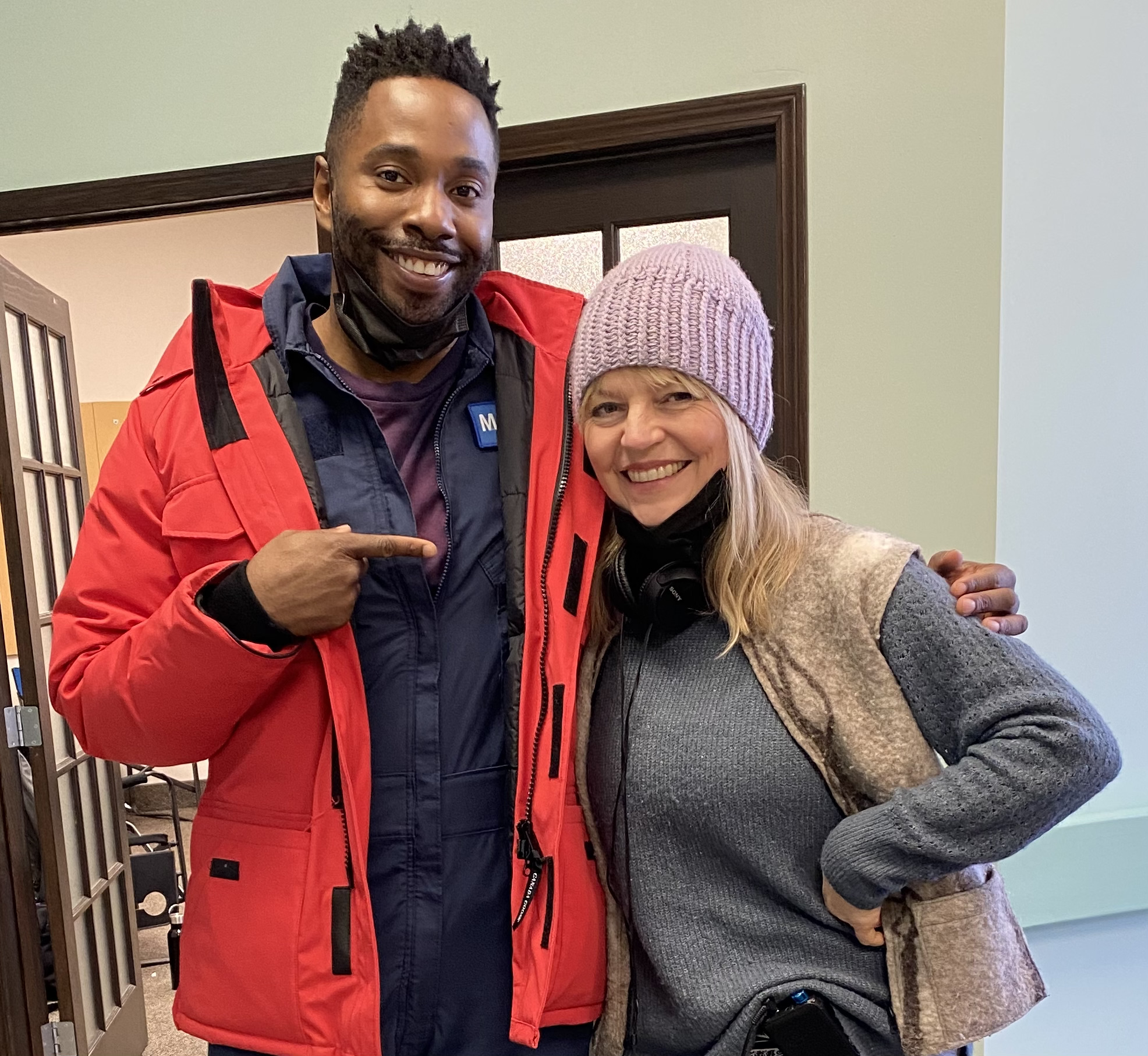
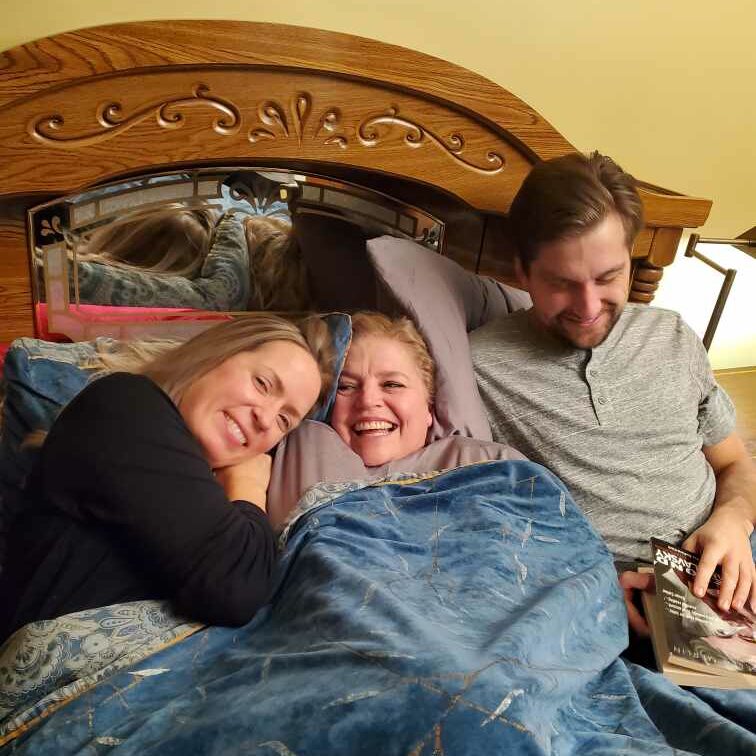
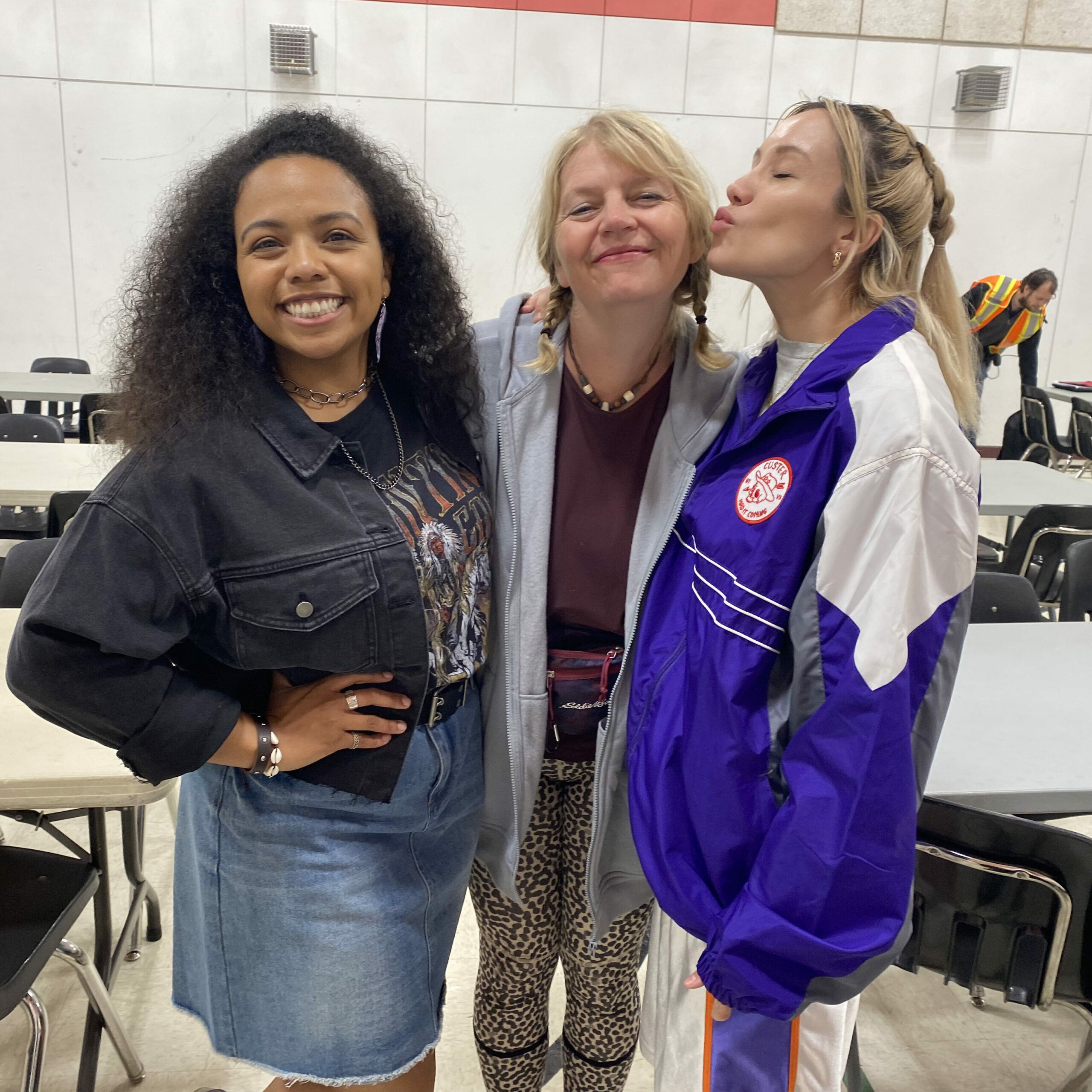
Photos: Sharon with Kheon Clarke on the set of SkyMed season 1; Sharon on set of Cold Open with Krystle Snow and Kristian Jordan; Sharon on set of Don’t Even, with Marion Jacobs and Tess Ray Houston.